
Keep Your Sprayer in Top Shape: How to Clean & Maintain Your Commercial Sprayer
- Apr 2
- 2 min read
Updated: Apr 3
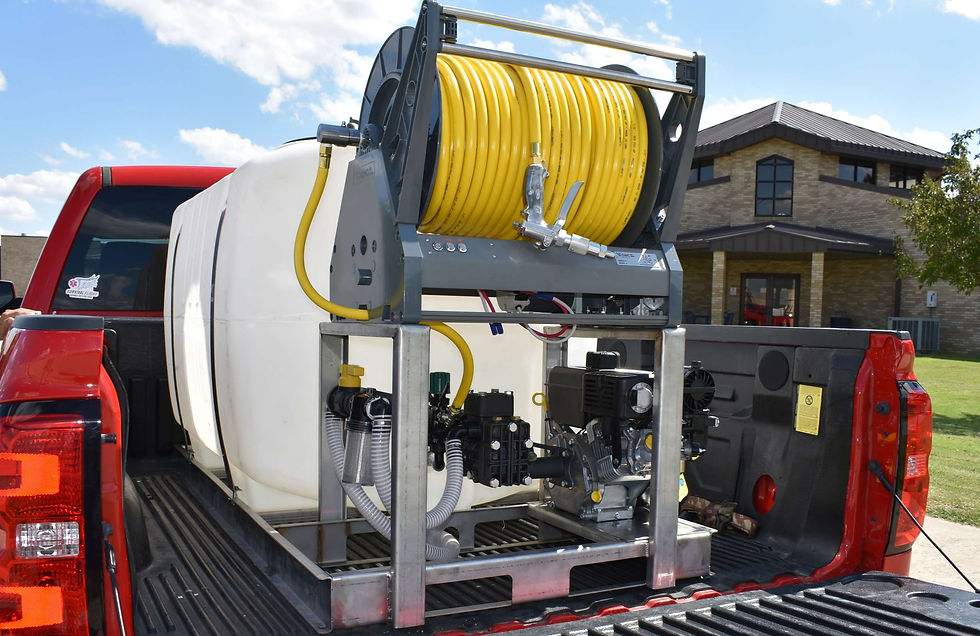
Whether you're spraying lawns, deicing a parking lot, or putting out a brush fire, your sprayer is one of the hardest-working tools in your operation. But even the best-built equipment needs care. Regular cleaning and maintenance not only protect your investment, but they also ensure accurate application, extend the life of your components, and minimize costly downtime. Let's walk through some practical steps to clean and maintain your sprayer.
1. Clean After Every Use
Leaving chemicals in your sprayer, even overnight, can lead to buildup, corrosion, and clogs. After every application:
Empty the tank completely. Safely dispose of leftover product according to the manufacturer’s label.
Flush the system. Rinse the tank, pump, hoses, filters, and nozzles with clean water or an appropriate cleaning solution.
Clean filters and nozzles manually. Use a soft brush and water — never metal objects — to prevent damage.
Rinse between products. If you’re switching chemicals, always clean the sprayer first to prevent cross-contamination.
Prevent damage and maintain spray accuracy by rinsing and cleaning directly after use. Keep several jugs of water in your truck to ensure you have ready access to clean water between jobs.
2. Inspect Components Regularly
A simple walkaround each day can prevent major issues on down the road. During inspection:
Check hoses for cracks, wear, or dry rot. Replace any that look compromised — hoses rubbing against metal parts are especially prone to leaks.
Inspect fittings and clamps to ensure they’re snug and leak-free.
Examine the boom for stress points or cracks, and repair welds where needed.
Look at your tank. Polyethylene tanks can degrade from UV exposure; inspect for discoloration or brittleness.
These quick checks can prevent sudden breakdowns in the field and keep your spray patterns consistent.
3. Protect Key Components
Keep critical components like your pump, pressure gauges, and valves in good working order:
Relieve system pressure after each use.
Keep gauges calibrated and check for pressure spikes that may indicate valve or pump wear.
Lubricate moving parts as recommended by the manufacturer.
Replace worn seals or O-rings immediately — leaks often start small but worsen quickly under pressure.
Store in a dry, shaded location. If you
4. End-of-Season Storage and Winterization
Before storing your sprayer for the off-season:
Power wash the exterior to remove all chemical residue and dirt.
Run antifreeze through pumps, valves, and booms to protect from freeze damage.
Store indoors, away from direct sunlight and moisture.


Comments